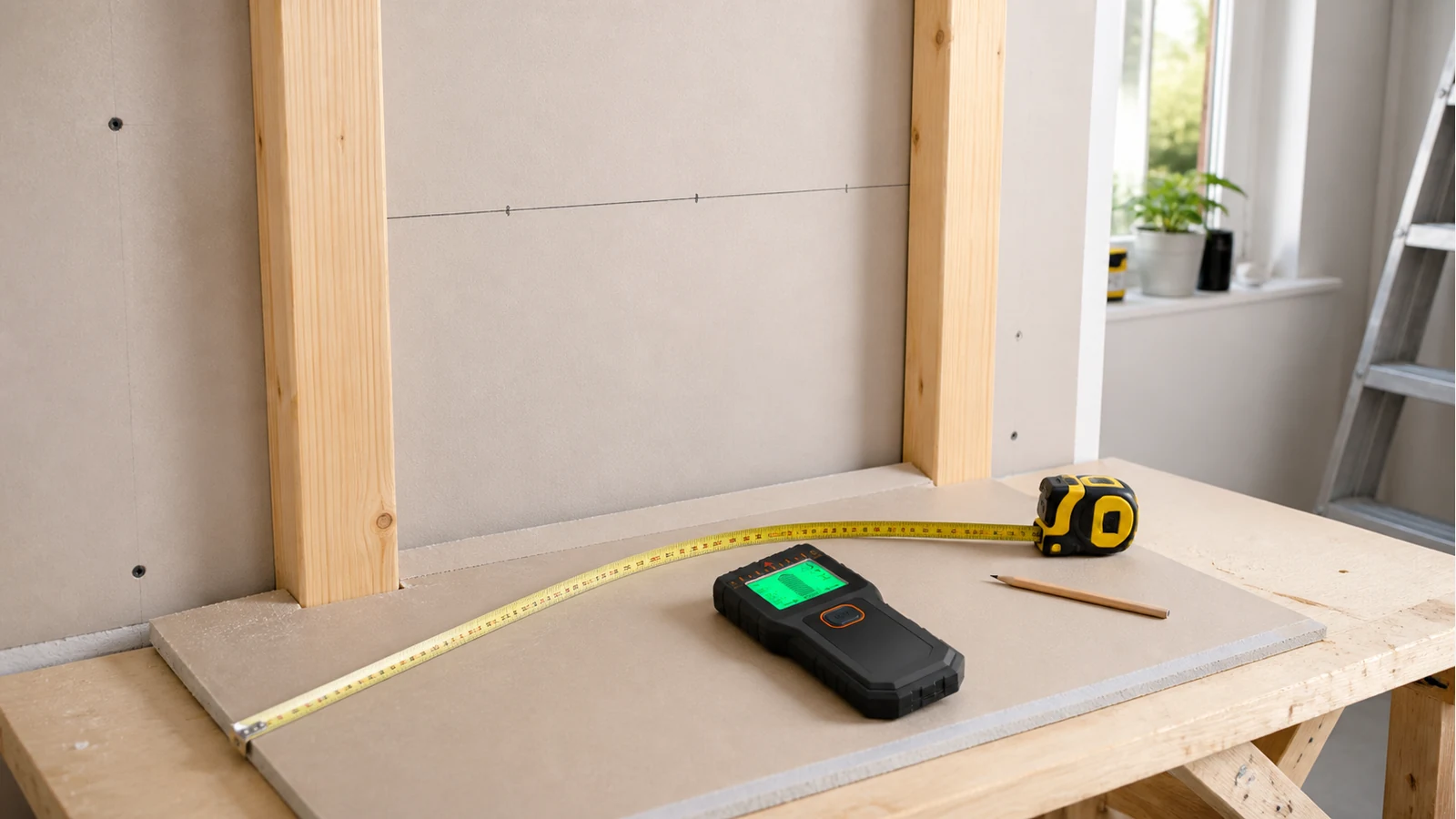
Uk Stud Centres 400mm Or 600mm
Uk Stud Centres 400mm Or 600mm is a label-first, evidence-first decision: start with the maker's instructions, then use the checks below before buying, cleaning, measuring or changing a routine.
UK stud centres 400 mm or 600 mm: how to use spacing after you find the first stud
This guide keeps the scope narrow: it answers the search question, separates confirmed evidence from assumptions, and avoids treating a product page as proof for claims it does not make.
The Homebuilding & Renovating is used here for: Homebuilding notes UK timber studs commonly around 400 mm or 600 mm centres.. The DIY Extra is used here for: DIY Extra restates typical UK stud spacing at 400 mm or 600 mm intervals.. The The DIY Fix is used here for: Trade/DIY explainers compare 400 vs 600 mm centres for plasterboard support and stiffness..
Decision Checklist
- Direct answer: many UK partitions use 400 mm or 600 mm centres; measure from a confirmed centre, do not assume.
- Local cue: 400 mm is widely described as the common domestic spacing aligned to board widths.
- Decision path: locate first centre → measure → predict next → rescan → only then choose fixings.
- Who should not rely on spacing alone: period walls, patched renovations, metal framing anomalies.
- Reader next action: write a one-line spacing record before drilling the TV or shelf row.
Evidence Boundaries
- Use the cited source and the site evidence only.
What Not To Assume
- Never present 400 mm as universal; older houses and renovations differ.
- Keep claims limited to verified evidence for detection accuracy percentages or WOEAOZY depth specs.
- Avoid US 16-inch guidance as the primary UK rule.
Practical Next Step
Use the checklist in order. If the manual, care label, appliance guidance or safety source says no, stop there; if it says yes, test the least risky small area or setup before scaling up.
For a related site guide, compare this with dot and dab or stud wall uk.