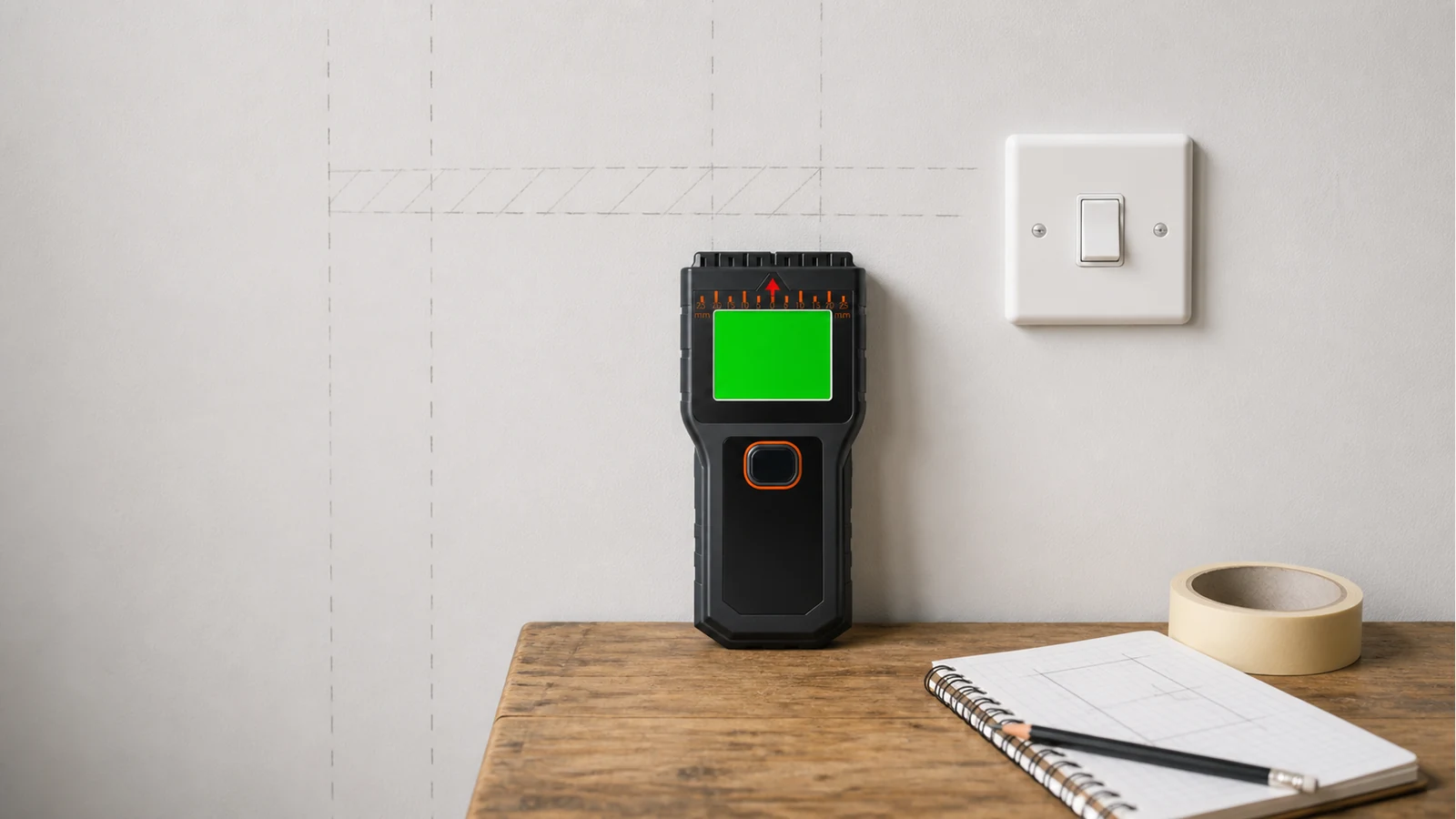
Prescribed Cable Zones Drilling Uk
Prescribed Cable Zones Drilling Uk is a label-first, evidence-first decision: start with the maker's instructions, then use the checks below before buying, cleaning, measuring or changing a routine.
UK prescribed cable zones before drilling: where cables are most likely, not ‘safe’
This guide keeps the scope narrow: it answers the search question, separates confirmed evidence from assumptions, and avoids treating a product page as proof for claims it does not make.
The Be Practical DIY is used here for: Be Practical DIY explains prescribed cable zones and why the word ‘safe’ misleads homeowners.. The BuildWiz UK is used here for: BuildWiz UK summarises BS 7671 prescribed zones and detector limitations before drilling.. The SELECT technical pocket guide PDF is used here for: SELECT pocket guidance restates zone geometry for cables concealed at less than 50 mm depth..
Decision Checklist
- Direct answer: prescribed zones are expected cable routes, so treat them as higher-risk drill areas.
- Local constraint: 150 mm top strip, corner strips, and horizontal/vertical lines from accessories.
- Decision path: map sockets/switches first, then scan intended hole, then decide drill/stop.
- Thin-wall note: walls ≤100 mm may extend zones to the reverse side.
- FAQ only for older DIY wiring exceptions and detector false confidence.
Evidence Boundaries
- Use the cited source and the site evidence only.
What Not To Assume
- Avoid give legal certainty that any zone is empty; older and DIY wiring can deviate.
- Avoid claiming a consumer detector proves a wall is clear of live cables or plastic pipes.
- Avoid quoting regulation numbers as legal advice; cite as public wiring practice context only.
Practical Next Step
Use the checklist in order. If the manual, care label, appliance guidance or safety source says no, stop there; if it says yes, test the least risky small area or setup before scaling up.
For a related site guide, compare this with dot and dab or stud wall uk.