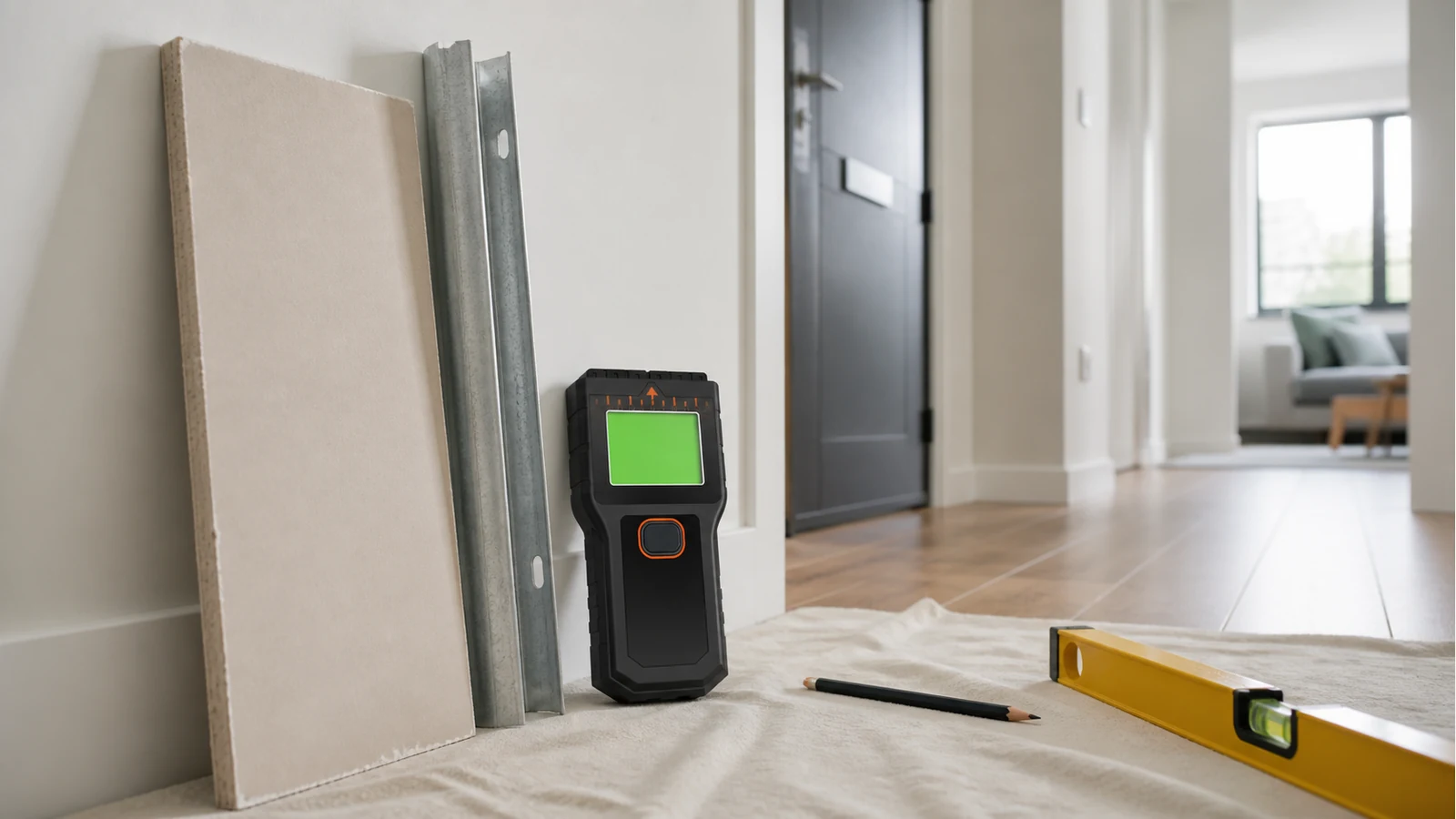
Metal Stud Finder Uk Flats
Metal Stud Finder Uk Flats is a label-first, evidence-first decision: start with the maker's instructions, then use the checks below before buying, cleaning, measuring or changing a routine.
Metal stud finder method for UK flats: fasteners, scan passes and fixing choices
This guide keeps the scope narrow: it answers the search question, separates confirmed evidence from assumptions, and avoids treating a product page as proof for claims it does not make.
The Homebuilding & Renovating is used here for: Homebuilding describes electronic density sensing and magnetic fastener finding, including metal/pipes/cables context.. The Mount TV is used here for: Mount TV notes plasterboard on timber or metal studs with typical 400/600 mm spacing in UK homes.. The Screwfix Community is used here for: Screwfix thread discusses metal stud spacing and neodymium magnet method in UK flats..
Decision Checklist
- Direct answer: many modern flats use metal framing; magnets find fasteners/stud faces while multi-mode scanners need careful interpretation.
- Pain: inconsistent detector beeps on double boarded metal stud partitions.
- Decision path: identify metal vs timber response → mark vertical continuity → choose stud screw vs cavity fixing strategy.
- Screwfix-style community cue: neodymium magnet sweep often reveals metal stud lines in London flats.
- Who should upgrade/stop: heavy cabinets when only thin metal is found and load path is unclear.
Evidence Boundaries
- Use the cited source and the site evidence only.
What Not To Assume
- Avoid claiming metal stud screws equal timber stud holding strength.
- Avoid name unverified WOEAOZY metal-mode performance.
- Forum advice is anecdotal; present as buyer discussion, not lab proof.
Practical Next Step
Use the checklist in order. If the manual, care label, appliance guidance or safety source says no, stop there; if it says yes, test the least risky small area or setup before scaling up.
For a related site guide, compare this with dot and dab or stud wall uk.